


Background - What this is for
Whether people trust your company has little correlation with how trustworthy you claim to be. Or how many times you mention that you care about client trust. If you’re in your infancy, they they have no public record to keep track of either.
Ask users why certain businesses feel more trustworthy than others and they’ll struggle to answer with any level of detail, even if they are all answering with the same options.
This is because most transmissions of trustworthiness are happening at the unconscious level, and your unconscious mind doesn’t use language in the same way your conscious mind does. The unconscious speaks the language of symbols, imagery, and associations.
Your message is still important, but rather than the exact wording, the following are getting processed by the reader without them even realising: the tone its taking, whether its showing its sources, whether it owns up to what it can’t do, whether it feels like a person or a machine. These are all signals of trustworthiness, and your users read those signals against every brand that already asks them to believe something.
That doesn’t mean there’s a right way to do any of those. As depending on what you’re trying to do for the customer, and what vibe you are trying to get across, the trust function will actually look quite different.
So to show you the different avenues currently being used to make customers feel assured, we’ve conducted a semiotic analysis across the worlds of 27 brands whose entire job is to be believed, from Rolex to Reuters to the frontier AI labs. We’ve decoded their output for the aesthetics, symbols, images, and a few more tricks each one uses to manufacture belief.
To make it easier to consume, we’ve highlighted the two biggest dimensions that organise the group, the quartiles of which produce our four territories, each with its own codes.
Codes are also useful because they tell what other things and brands you will be associated with if you choose to use them.
Mapping the territories also shows a (limited) view of which strategies get used most often, and which are less crowded. As a word of caution, crowded doesn’t mean best, but it also doesn’t mean over-crowded. You will still need to know what works best for you.
Dimension 1: Authority vs. Evidence
Do you give want to give the impression that trust should be assumed, or are you making an effort to prove yourself?
Heritage tends to be important here. On the Authority side, brands speak for themselves. Rolex’s crown carries obvious implications, for example.
Heritage isn’t really an option for newer AI companies though, but a few still try to spell out authority in other ways. Anthropic has a published constitution. Harvey has a client list of law firms you’ve heard of. None of them show you much. They tell you who they are and expect that to be enough.
On the Evidence side, you check for yourself, enabled by the business. Open source, citations, live numbers, reviews. Signal shows you the ciphertext. Perplexity shows you the sources. Stripe shows you the uptime. Trustpilot, and I quite like this one, shows you the one-star reviews on its own homepage.
“Don’t take our word for it”, while still of course subtly hoping you do indeed take their word for it.
Here’s how they line-up on that first dimension:

Dimension 2: Human vs. System
Ok, so you’ve decided whether you’re going to try to prove how trustworthy you are.
Next is the medium of that interaction. Or to be more specific, who it is that is giving that message.
The first option is to humanise. Make the customer feel like they are talking to a person. So you get a lot of: Faces, care, ‘membership’, reassurance, the sense of being looked after.
Light version would be how Amex shows members on beaches. Whereas Sierra spends its whole homepage on one warm portrait and barely mentions the product.
The other option is to make the customer feel like they are interacting with a system. That may sound cold, but sometimes that is what you want. You just want to be sure the thing works, and well-oiled machines do.
At this end of the spectrum you get a lot of: infrastructure, statistics, austerity, often not a single person on the page. Stripe gives you a GDP counter ticking in the corner. Anthropic gives you documents.
So this axis is basically warmth versus machinery, here’s how they line-up:

The Territory Map
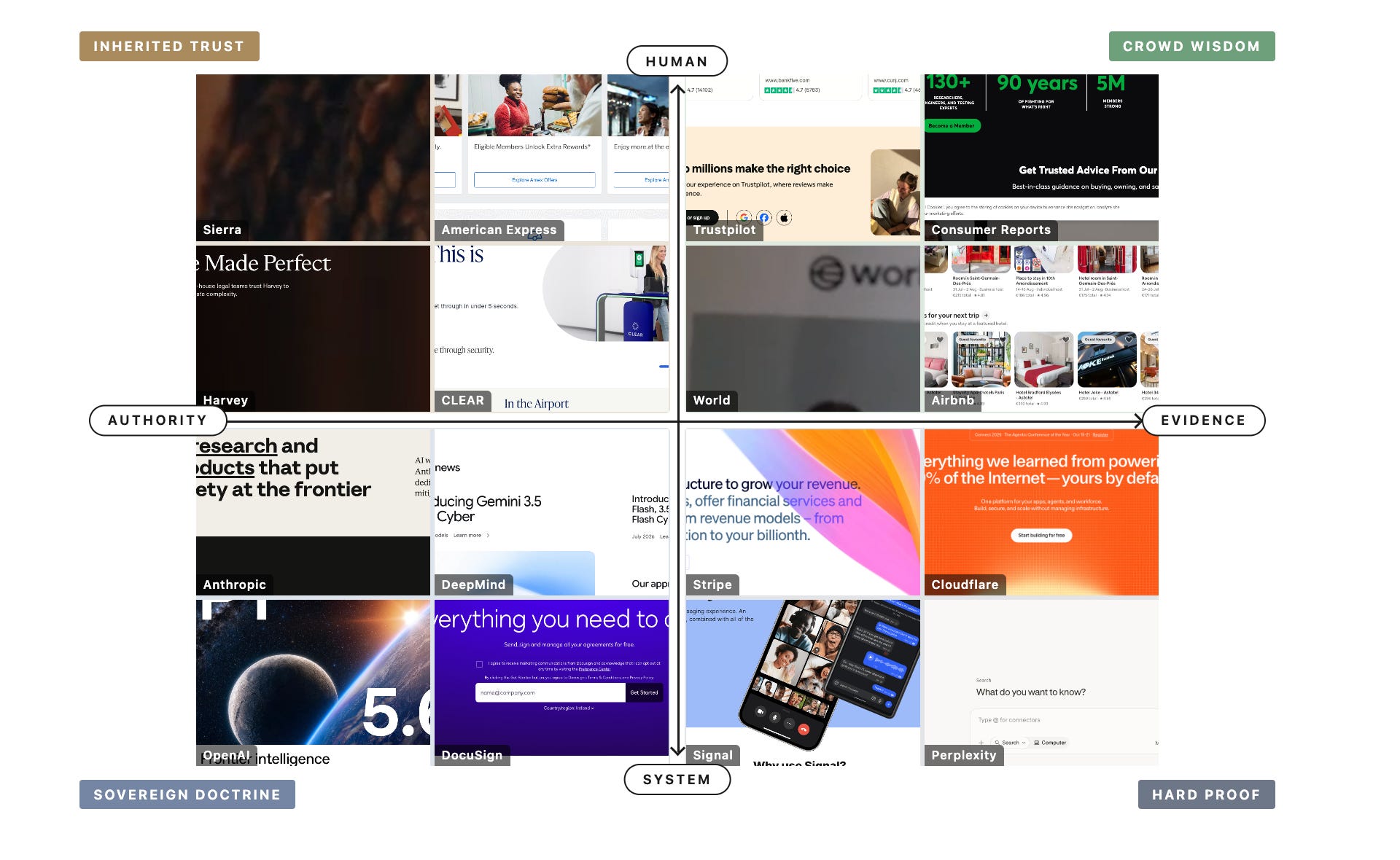
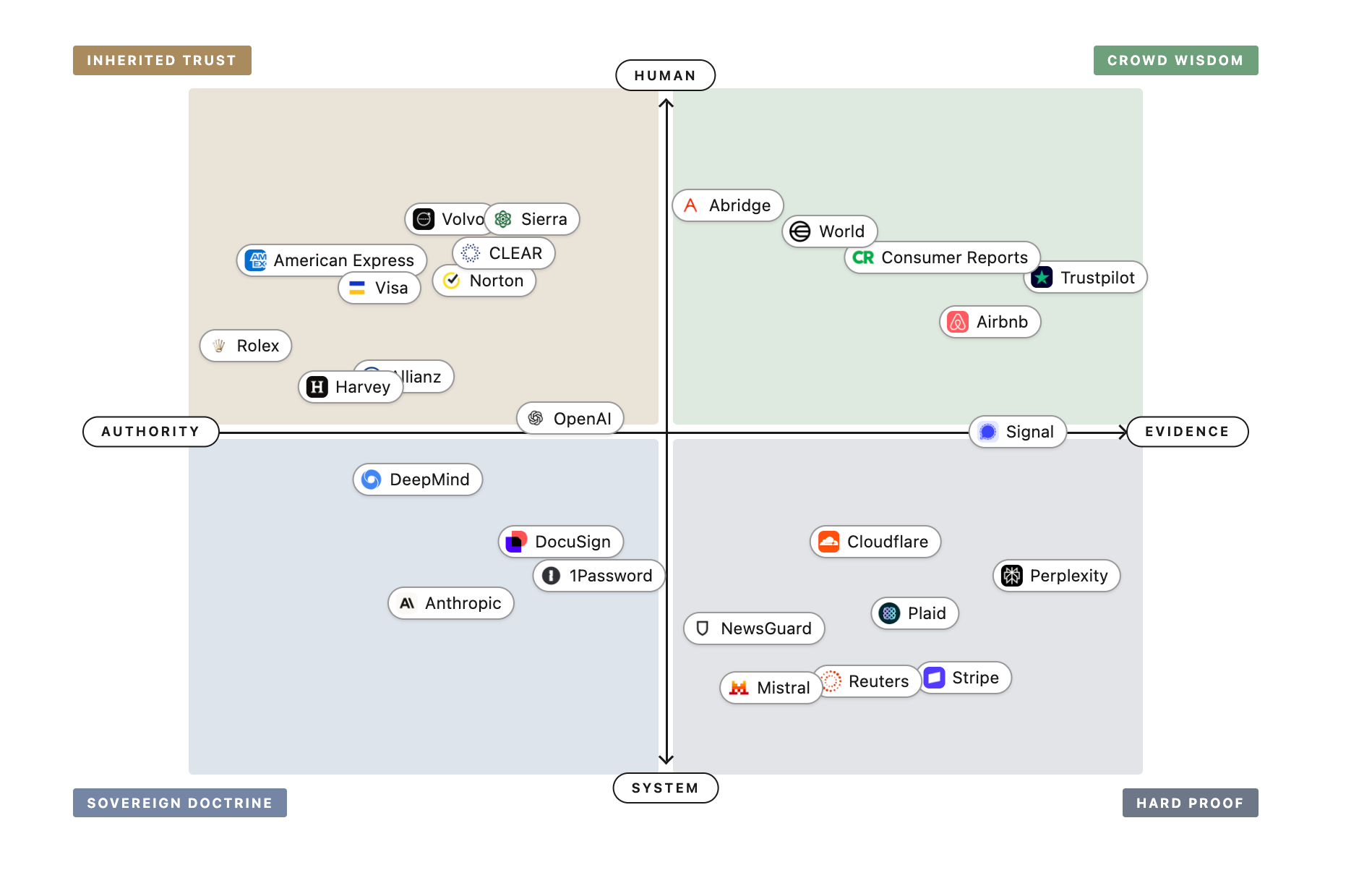
Taking our brands and placing them on both axes gives us this plain. The quadrants show which trust game each brand is trying to play, which is also the game your users will assume you’re playing the second they land on you.
These territories are:
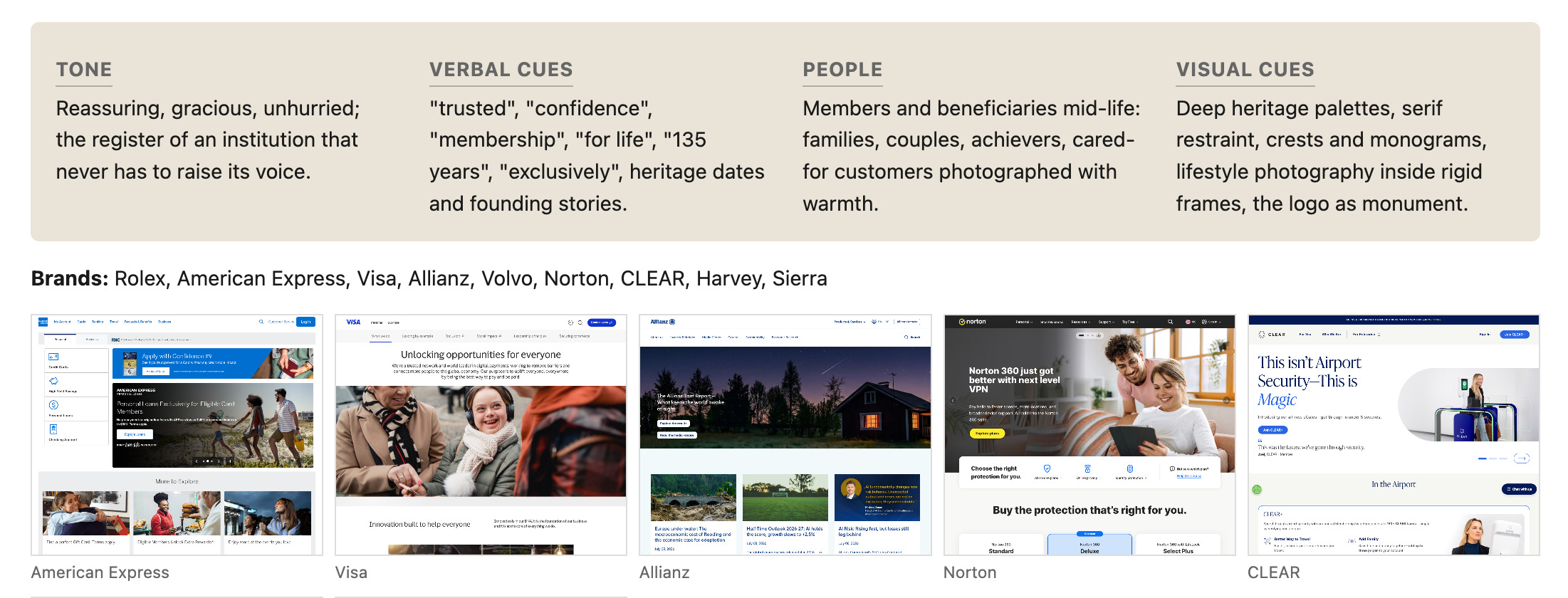
Inherited Trust: Human × Authority
Crowd Wisdom: Human × Evidence
Sovereign Doctrine: System × Authority
Hard Proof: System × Evidence
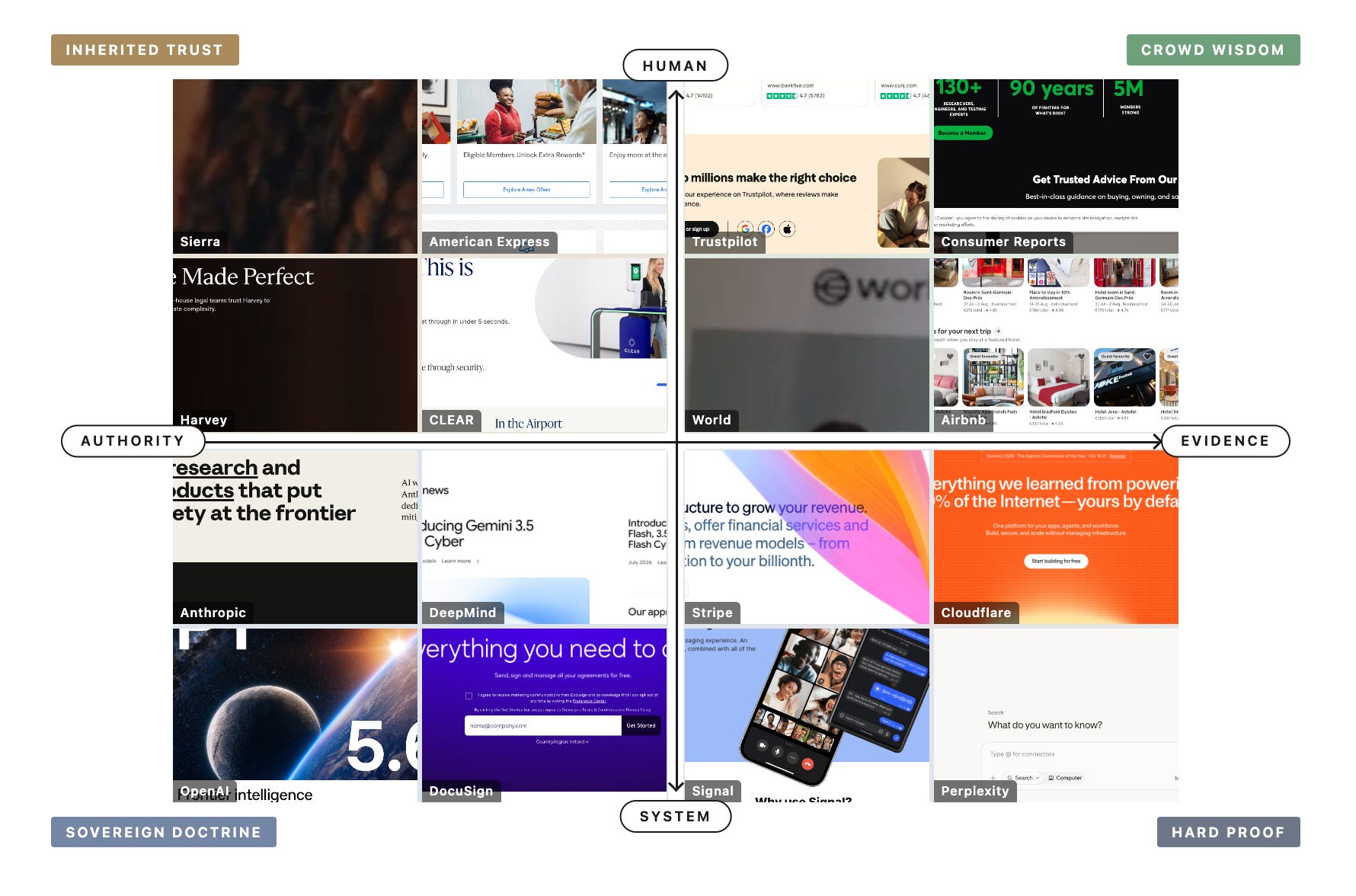
And this is what it feels like:
Territory by Territory Deep Dive
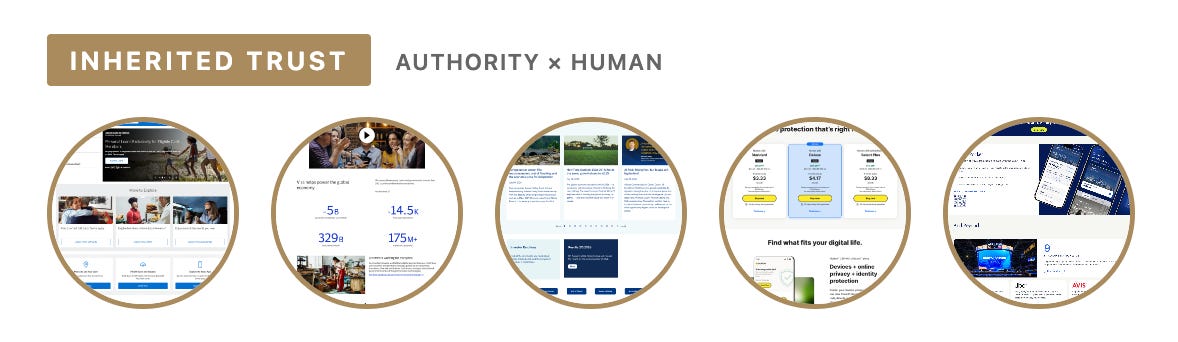
You ever hear the term Lindy being used, as in to describe something that’s effectiveness is proven by the fact it’s survived this long? These brands are a bit like that. A crown certified for a century, a card backed by the full faith of the government, a seatbelt Volvo invented and then gave away to save a million lives.
You’re being invited into a club, and that club feels warm. Rolex and Visa and Amex barely bother arguing they’re trustworthy. They let heritage photography and the word “membership” carry the rest.
Harvey and Sierra are interesting as brand new AI products reaching for the old codes, candlelight and craft and elite client logos, so they feel established on day one.
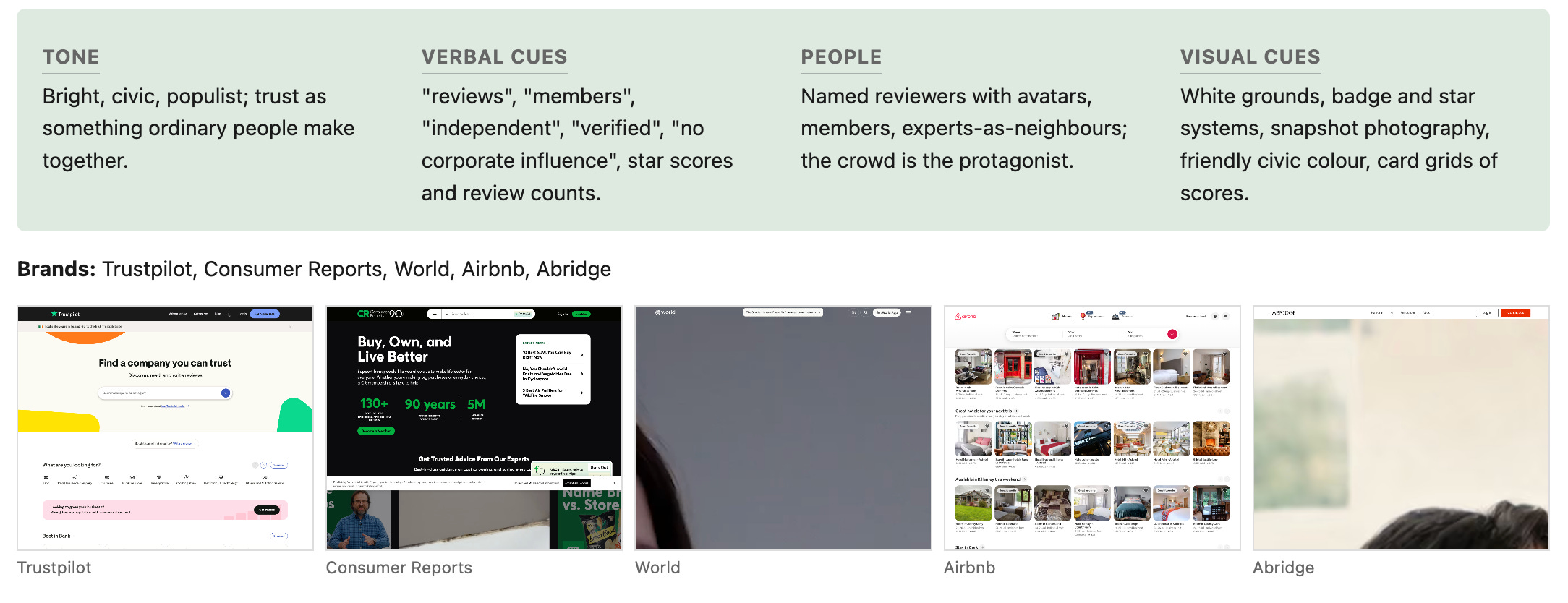
This is where the crowd does the vouching on behalf of the company, and each platform keeps its own credibility by visibly policing itself.
You can do this ironically to show some self-confidence, e.g. Trustpilot puts the one-star reviews right there on the homepage. Consumer Reports takes no ad money and buys the products it tests. Airbnb underwrites the stranger with a badge and a guarantee. World turns proof-of-personhood into a little photo you take with your mates.
The evidence is human. Real reviewers, real members, real faces.
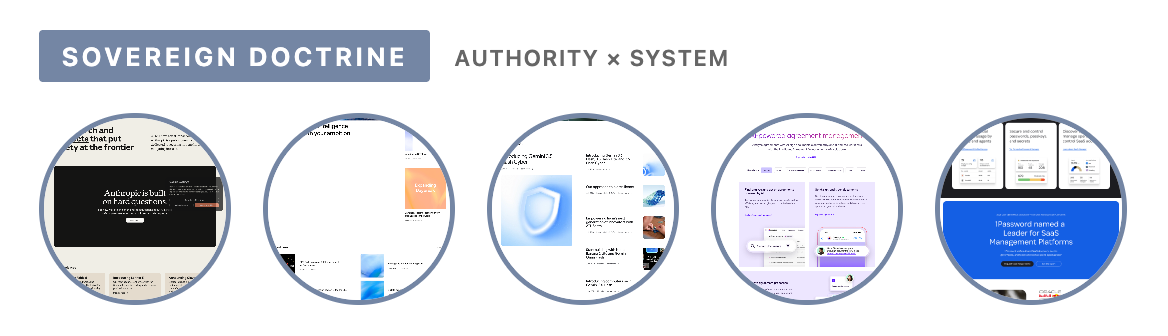
Documentation. Documentation. Documentation. A constitution, a responsible-scaling policy, a compliance certification, a governance model. You’re asked to trust the source, and it’s delivered with a total absence of people.
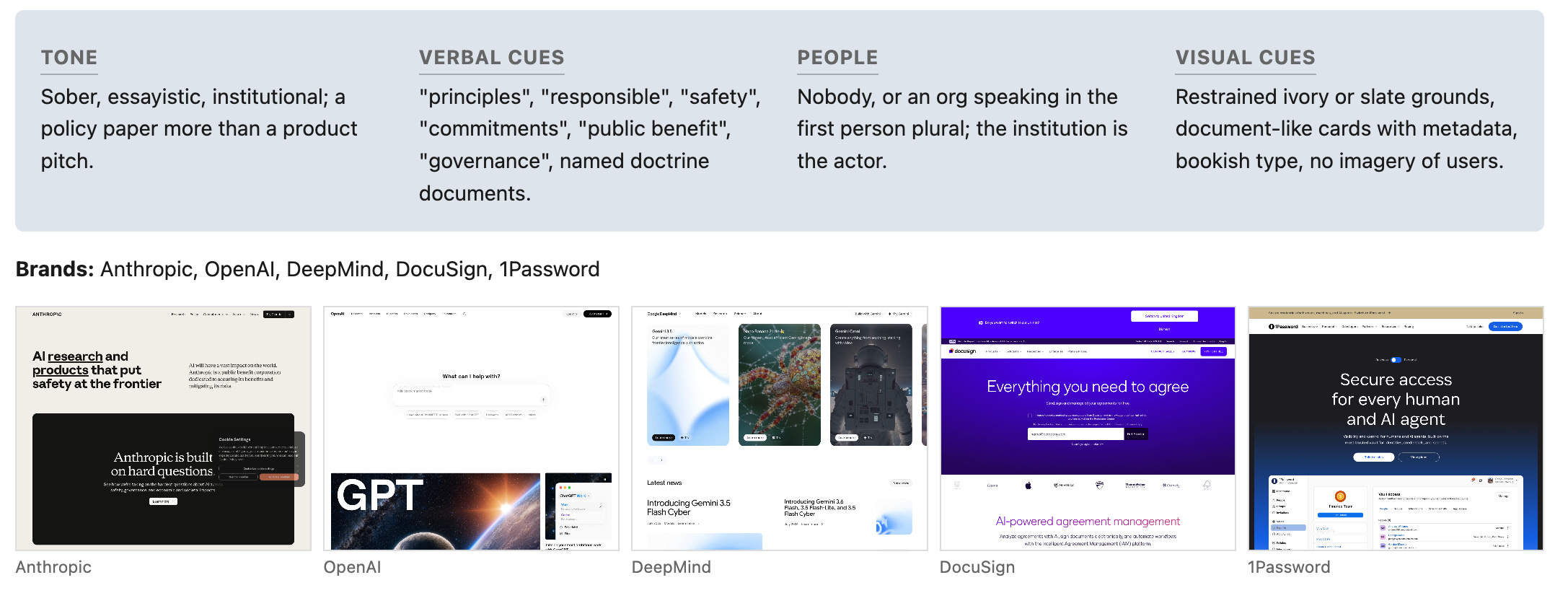
This is where the frontier AI labs sit, and it’s worth really looking at. Anthropic, OpenAI and DeepMind ask for your trust the way a central bank does. Publish the principles, look serious, and show neither the warmth of the heritage brands nor the checkable receipts of the infrastructure lot.
It is the thinnest trust position on the board.
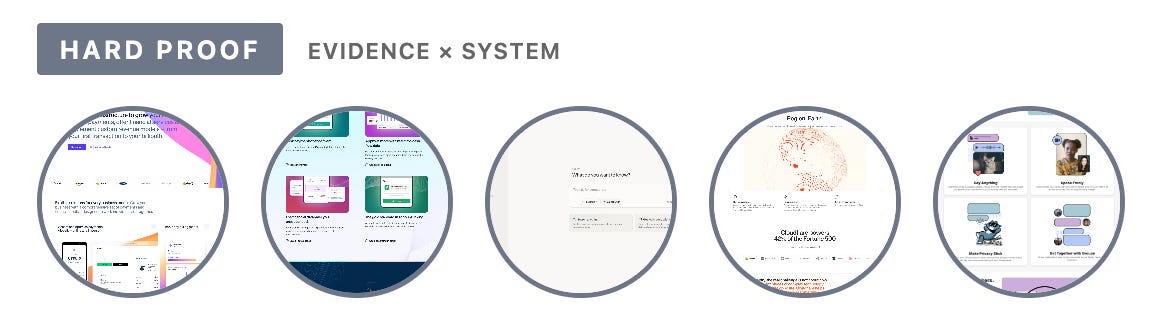
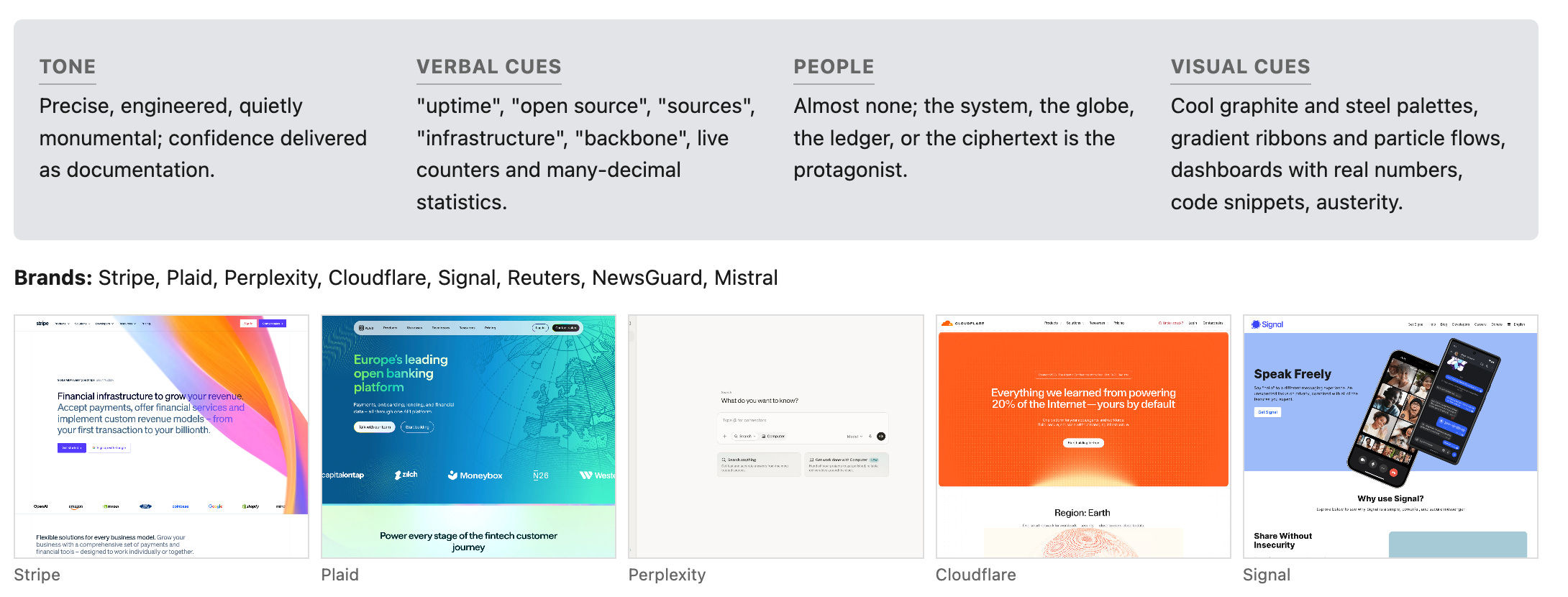
Can you hand over something a stranger could check without your help? That’s the whole move here, and it arrives as machinery rather than as a claim: five nines of uptime, a trillion dollars processed, an open-source protocol anyone can audit, a citation under every sentence.
Stripe and Cloudflare turn operational numbers into a cathedral. Signal and Reuters build structures they literally cannot betray, and then show you the structure.
There are almost no people here and none are needed, because the proof doesn’t depend on you liking anyone. Which makes it the most durable trust in the set, and also the coldest, so it’s worth being sure that coldness is what your customer wants from you.
Strategic read
So which corner have you ended up in, and did you choose it?
The AI labs have wandered into a cold one, and it’s unclear if they meant to or if one did it first and the rest just copied. Anthropic and OpenAI both sit in Sovereign Doctrine, which this whole exercise suggests is the weakest position going. You may remember Jony Ive despairing over the magic leaving Silicon Valley somewhere between the iPod and now. This is a decent illustration of it.
Everybody older than them leans on one of two things: time, or numbers. Legacy brands lean on how long they’ve been here, infrastructure brands on how much they’ve processed. The labs have neither a century nor an uptime figure yet, which is why they keep reaching for the language of the charter without the decades that make a charter believable.
Which leaves the gap. Warm plus verifiable, meaning Crowd Wisdom and the warm edge of Hard Proof, is where trust is both provable and human, and it’s oddly empty. Abridge gets closest, pairing a hundred million conversations with a patient’s smile.
And if you are interested in more, we’ve also left you all of the coding sheets for each individual brand below…
